Table Of Content
- Light
- Contrast furniture weight, color and texture
- - Creating Focal Points with Radially Balanced Furniture Arrangements
- Creating Focal Points and Visual Interest
- Can radial balance be used in graphic design as well?
- The Fundamental Principles Of Design: Understanding Balance in Interior Design
- - Circular Shelving and Storage Solutions: Organizing Your Home with Radial Balance

Whether you are designing a living room, bedroom, kitchen, or any other space, following certain rules can help you achieve the desired balance. Rather than repeating the same item within a space to achieve balance, in this case we are using different elements with a similar perceived weight to achieve balance on the opposing axis. As stated above, complex shapes often feel heavier and for that reason are commonly used to achieve asymmetrical balance. Asymmetrical interiors tend to feel more dynamic and less rigid because in these spaces a variety of objects types are working together to create balance.
Light
When it comes to interior design, creating balance is crucial to achieving a harmonious and visually appealing space. Balance refers to the distribution and arrangement of elements within a room, where no single element overpowers the others. It is the key to creating a space that feels inviting, comfortable, and aesthetically pleasing.
Contrast furniture weight, color and texture
The Amphora Vessel Trend Will Bring Balance To Your Space, Says Interior Designers - The Zoe Report
The Amphora Vessel Trend Will Bring Balance To Your Space, Says Interior Designers.
Posted: Fri, 29 Jan 2021 08:00:00 GMT [source]
While achieving asymmetrical balance in a room is harder, you can follow a few tips to inspire your best look. This style creates a healthy balance when you arrange elements that do not mirror each other and where you do not follow literal or imaginary lines. Asymmetrical balance relies on elements that are not arranged proportionally on a central axis. It is quite easy to achieve balance in the bedroom, especially when you follow the symmetrical arrangement of elements. This design does not demand much space; as seen from the image above, all you need is a unique central point to accentuate. The challenge with a symmetrical balance is that it can be too predictable, especially when you use elements such as wall units and fireplaces to create the central axis.
- Creating Focal Points with Radially Balanced Furniture Arrangements
Radial balance in interior design refers to the arrangement of design elements around a central point, creating a visually harmonious and balanced space. This principle can be applied to various aspects of design, such as furniture placement, lighting, and artwork. One of the greatest challenges in achieving radial balance in interior design is finding the perfect balance between the various design elements. This requires careful consideration of each element’s visual weight and distribution, as well as an understanding of how these elements interact with one another. Interior designers must be adept at evaluating and adjusting the visual weight of a space to create a sense of balance and harmony.
In addition, the one side closer to the window is decorated with a muted lamp, while the opposite side receiving less natural light is decorated with a chandelier. Overall, the design creates enough contrast but maintains the best visual balance, so no element is more prominent than the other. Everything in life is about balance, and this is a lesson we’ve been taught throughout life. As adults, we need to balance life and work and, even more importantly, know how to create balance in the places we live in. In this article, we will explore interior design balance and tell you what you can do to spaces to make them more welcoming. Incorporate radial balance into your storage solutions by using circular shelves or organizing units.
What is Balance in Interior Design?
This balance is achieved by arranging different pieces of design around a centre point. Interior designer Jen Dallas says, 'balance is important to keep a room feeling harmonized whether it be the color or materials selected or the arrangement of furniture. Too much of one element and the room feels boring and one-note, or off-balance.
Can radial balance be used in graphic design as well?
Use them as guidelines and adapt them to suit your own preferences and the unique characteristics of your space. By creating a strong focal point, you can guide the eyes and establish a sense of visual balance in the room. The focal point becomes a visual anchor that ties the design together and adds intrigue to the space.
The Fundamental Principles Of Design: Understanding Balance in Interior Design
In my experience, asymmetrical balance can be achieved through the use of contrasting colors, textures, and shapes, while still maintaining a level of consistency within the overall design. For example, I might use a large piece of artwork on one wall, which is counterbalanced by a grouping of smaller framed pieces on the opposite wall. In addition to radial balance, interior designers must also consider other design principles, such as symmetrical and asymmetrical balance, to create a truly balanced and cohesive space.
One of the key components of radial balance is the use of design elements that radiate from a central point. These elements can include furniture arrangements, lighting fixtures, textiles, and artwork, all of which contribute to a room’s overall visual weight and design balance. By carefully selecting and arranging these design elements, interior designers can achieve balance and create a space that feels both harmonious and visually interesting.
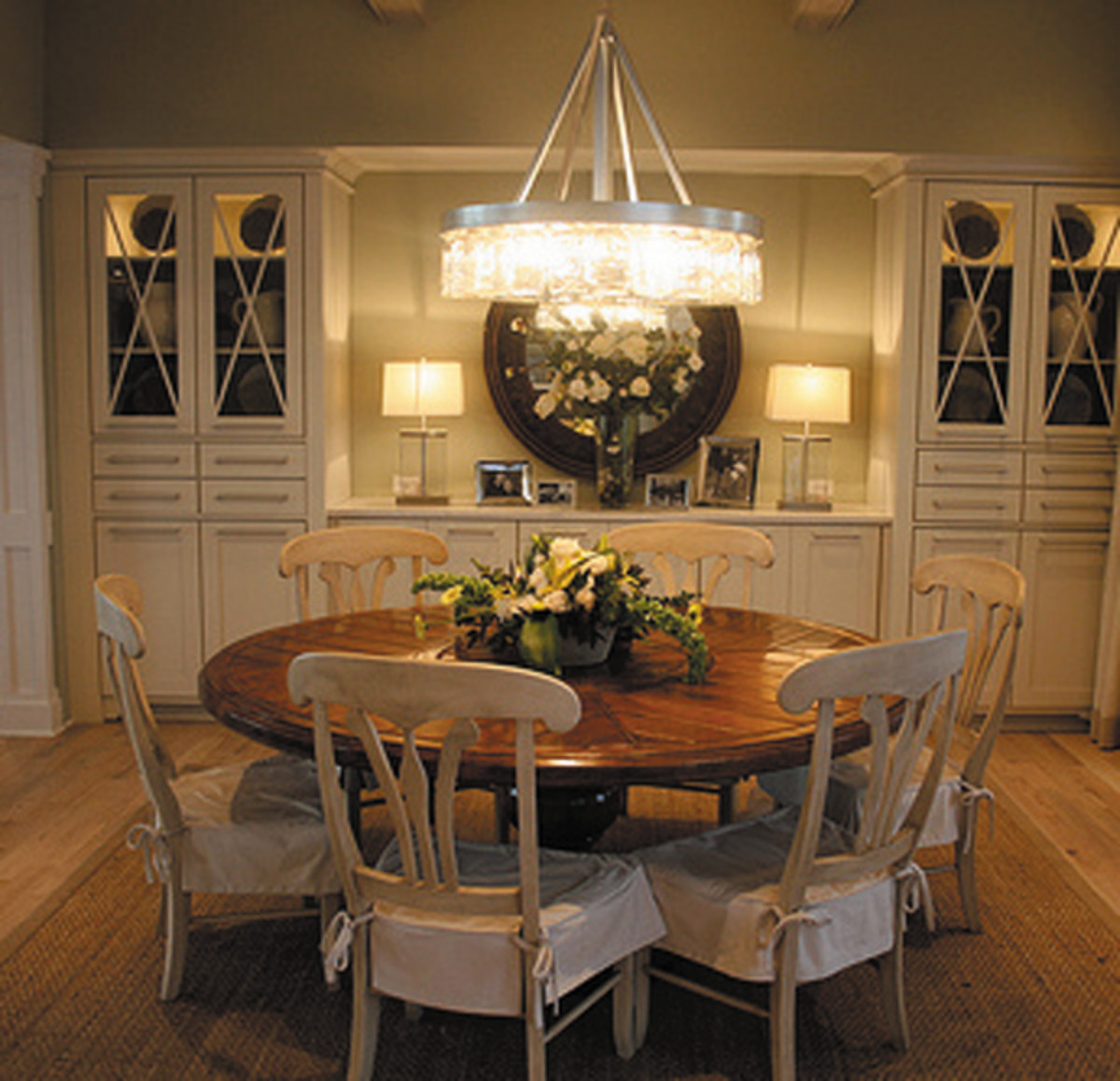
This type of balance can create a strong focal point and adds a sense of unity to the space. For example, a round dining table with chairs spaced evenly around it is an example of radial balance. You can take inspiration from the image above if you have limited space for your dining area. The modern chairs complement the round table to create radial balance in a room with symmetrical corners. To achieve the look, the designer intentionally used radial angles; hence the importance of the round industrial chandelier fixed right above the round table. The image above shows a minimalistic sitting room designed for radial balance.
The simple formula creates a mirror image, reflecting design elements (furniture, decor, architecture) on either side of a focal point (like matching lamps on either side of a sofa). And while today’s designers insist true symmetry in interior design can be formulaic and dated, it still has a home in spaces that benefit from a sense of calm, clean comfort. Radial balance utilises a central focal point that design elements radiate outward or inwards to the central point. An example of which is a circular dining table that is reinforced by lighting, rugs and placement of objects. The use of radial balance is a popular choice for hotels and office spaces as they often create stunning results.

To avoid making this mistake, you will want to work with a theme color for the walls and choose matching or complementing colors for furniture and decor items. As the name suggests, radial balance is created from the center of a room, and every design element is arranged outward from this focal point. The design resembles elements of the natural world, like the petals of a flower. In feng shui, radial symmetry is considered auspicious in the pattern of life.
By using asymmetrical design, you can create a unique and captivating space that feels both comfortable and visually intriguing. Asymmetry in design is all about achieving balance without relying on perfect symmetry. In an asymmetrical layout, elements are arranged to create visual interest without looking chaotic or unbalanced. This approach to interior design allows for more flexibility and creativity, resulting in spaces that feel dynamic and engaging. In the following sections, we will explore additional rules and principles that can be used in conjunction or independently to achieve a well-balanced and visually appealing space. Understanding balance in interior design involves considering various factors such as shape, color, pattern, texture, and spatial distribution.




No comments:
Post a Comment